


本文
(Nationally Designated Historic Site)
Horinouchi Shell Mound
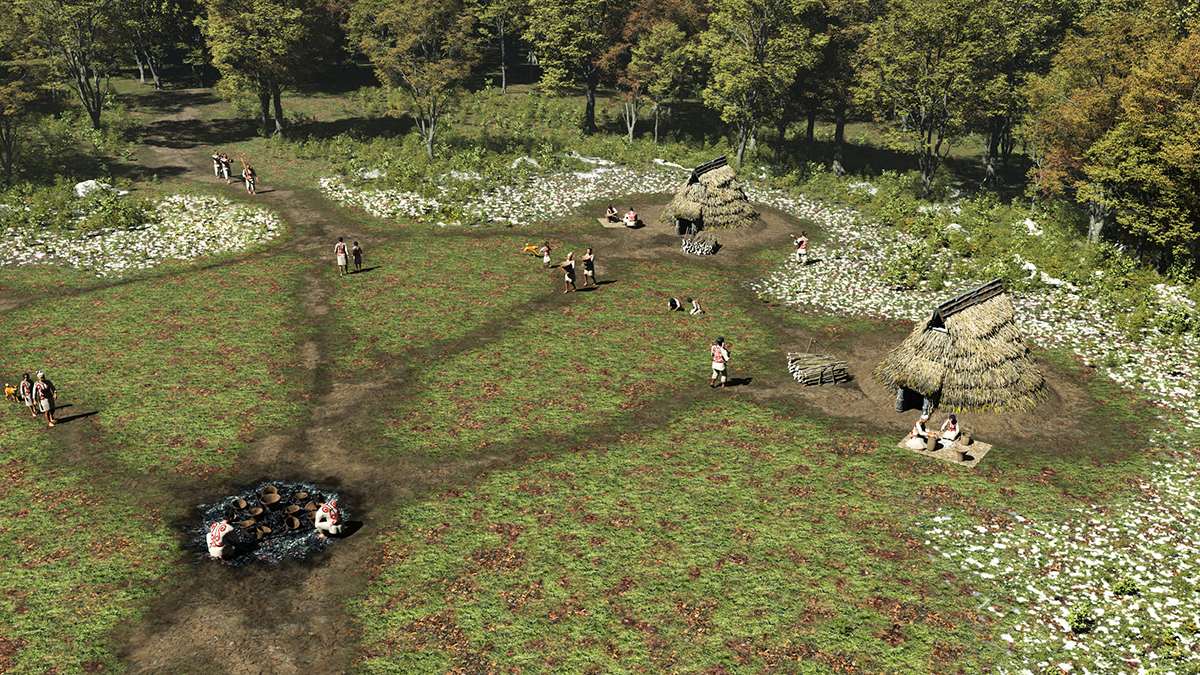
Historians are uncertain about when humans first arrived in Japan from the Eurasian continent, but Paleolithic sites from tens of thousands of years ago have been found across the archipelago. The Horinouchi Shell Mound is an important archeological site that constitutes the remains of a settlement in the Horinouchi area of Ichikawa City. Dating from 4,000 to 2,500 years ago, it is one of the largest shell mounds discovered in Japan.
Despite their name, shell mounds do not consist entirely of shells. They usually contain various kinds of domestic waste, such as bones, stone flakes, and pottery sherds. In Japan, mounds like these are associated with Jōmon pottery, which is characterized by jōmon, or “rope patterns,” pressed into the clay. The Jōmon period (11,000–500 BCE) derives its name from the name of these patterns.
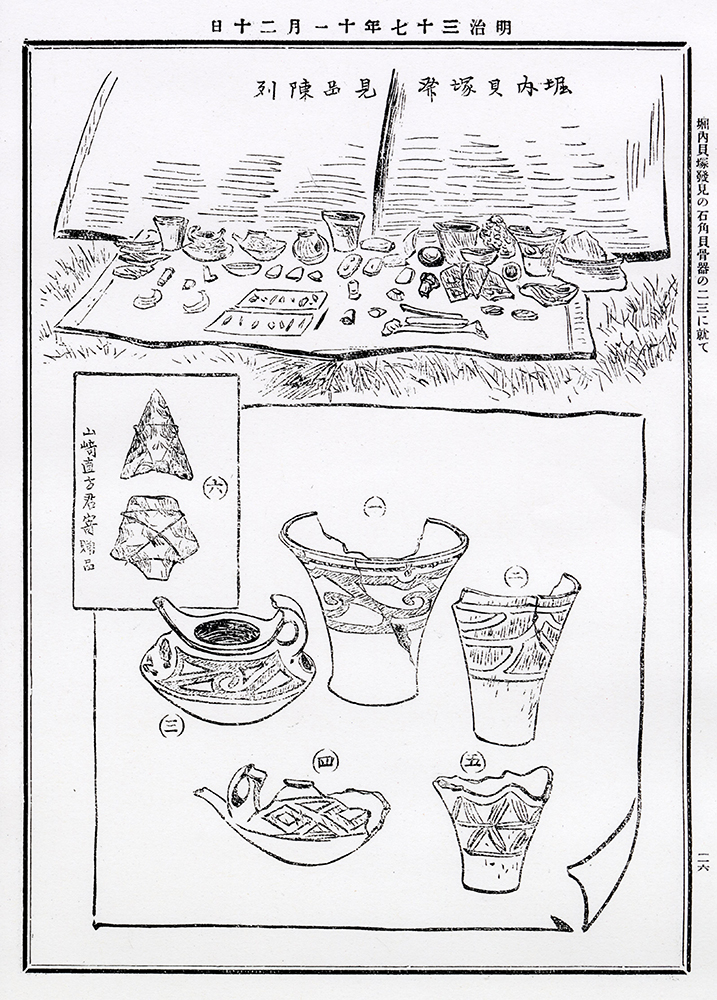
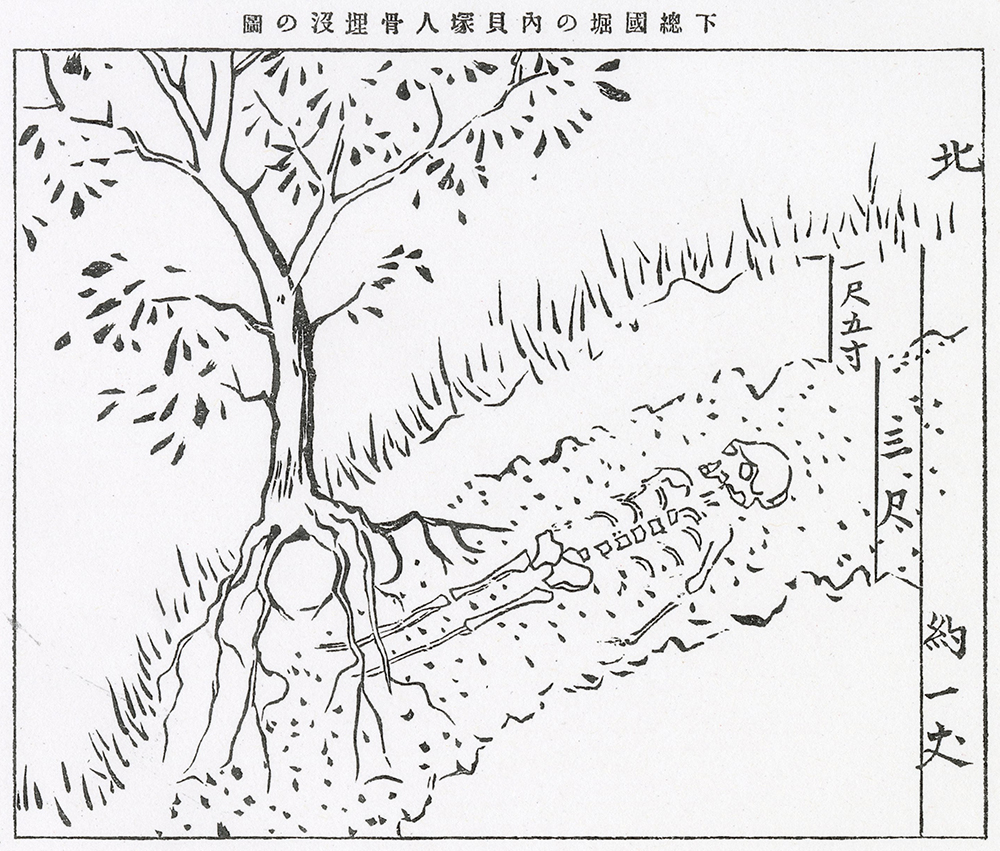
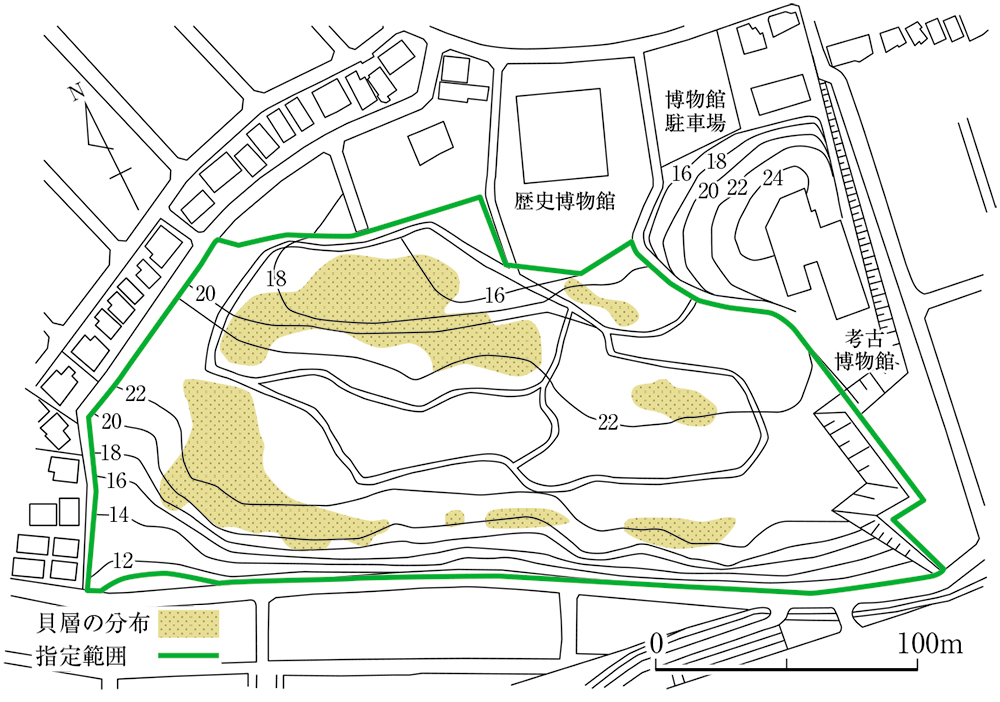
Between 4,000 and 2,500 years ago, the shore of Tokyo Bay was much closer to this site. The Horinouchi Shell Mound is situated on a plateau some 22 meters above flatlands east of the Edo River on the northeastern side of Tokyo Bay. The shell deposits are distributed over an area about 225 meters east–west and 120 meters north–south. In 1904, researchers from the Anthropological Society of Tokyo published 明治時代の雑誌に紹介された出土品 明治37(1904)年10月に日本で最初に発見された埋葬人骨
Source: 大野雲外「堀内貝塚発見の石角貝骨器の二三に就て」『東京人類学会雑誌』第20巻第224号(1904年)より転載
Source: 高島唯峰「貝塚叢話 其二 下総国堀の内貝塚の人骨」『考古界』第8篇第6号(1909年)より転載
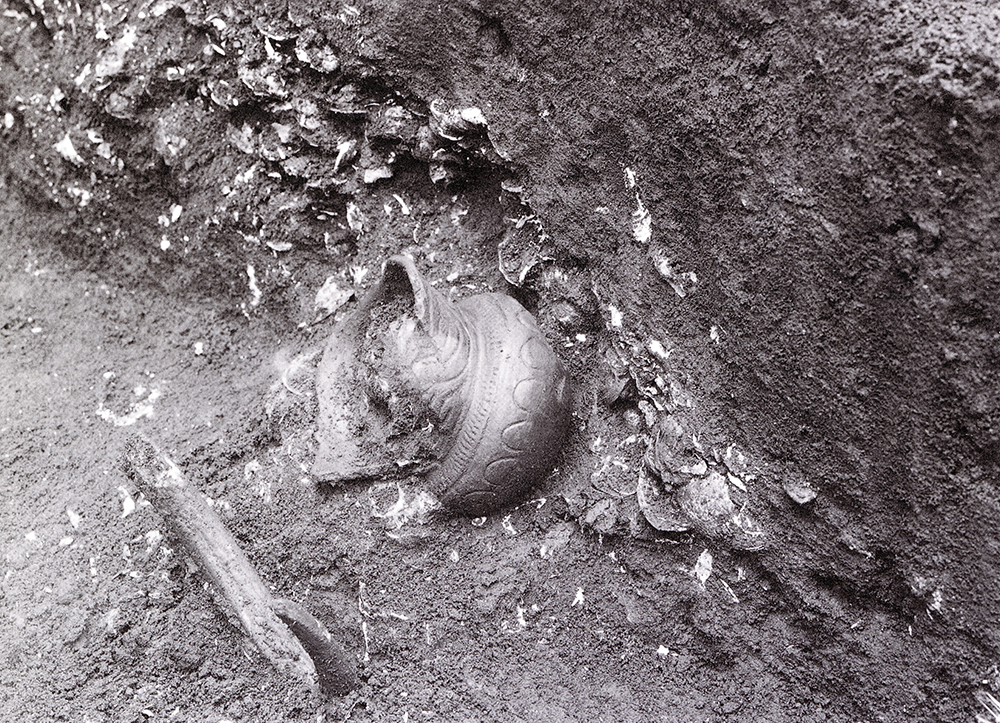
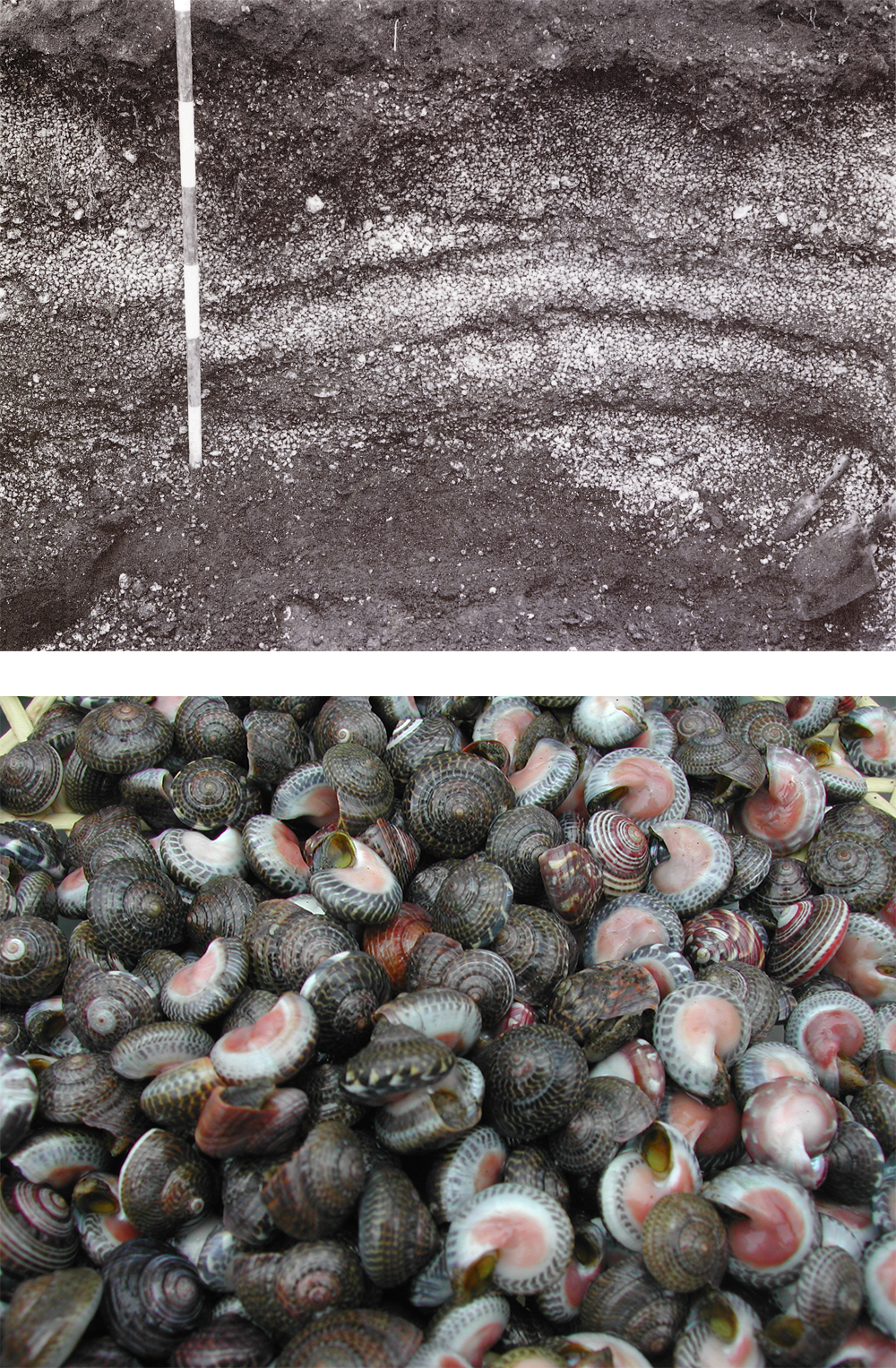
The Jōmon people were hunter-gatherers. The Horinouchi settlement was well situated because it provided easy access to seafood from the ocean and rivers—fish, shellfish, and cuttlefish—and to food from the mountains—nuts, berries, and wild game. When one food source was scarce, the inhabitants could turn to another, and this diversification improved their chances of survival. Based on the remains in the mounds, shellfish such as clams and sea snails were likely an important part of the inhabitants’ diet. They seem to have favored shellfish that had ample meat and were easy to harvest. Countless shells and shell fragments are visible along the path that winds through the site.
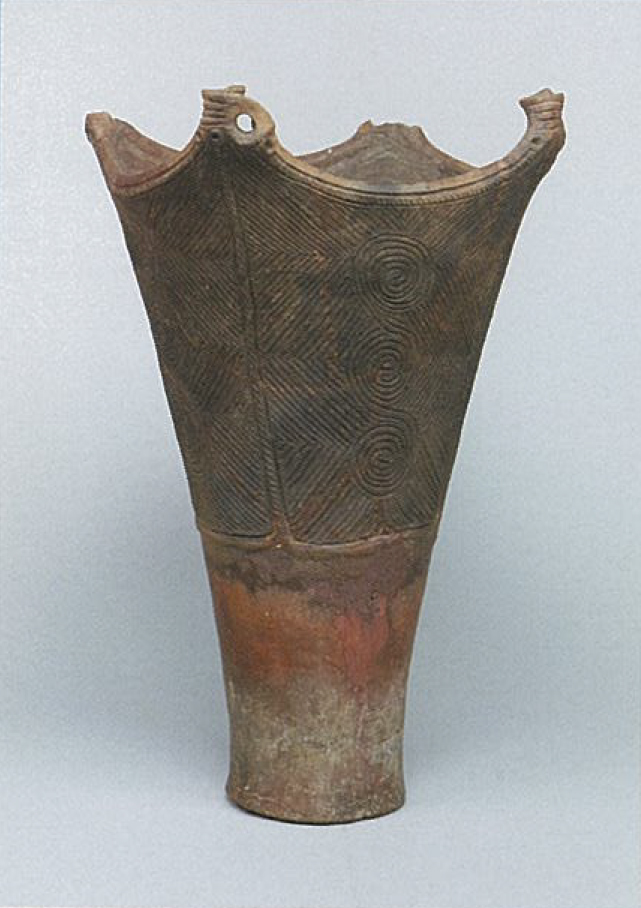
Jōmon people created many kinds of pottery, including bowls, deep pots with small necks, vessels with spouts, and pots shaped like morning glories. Despite their limited technology, potters in Horinouchi fashioned splendid vessels with ornate rims and spiral engravings. Outstanding examples of this pottery, as well as flints and other tools unearthed here, are on display in the Ichikawa City Archaeology Museum along with bone fragments and dioramas that depict life in the Jōmon period. Given the site’s proximity to Tokyo, it is one of the most-studied shell mounds in Japan, and similar pottery found elsewhere is called “ 堀之内式土器の基準になった土器(個人蔵)
画像提供:東京国立博物館
Image:TNM Image Archives
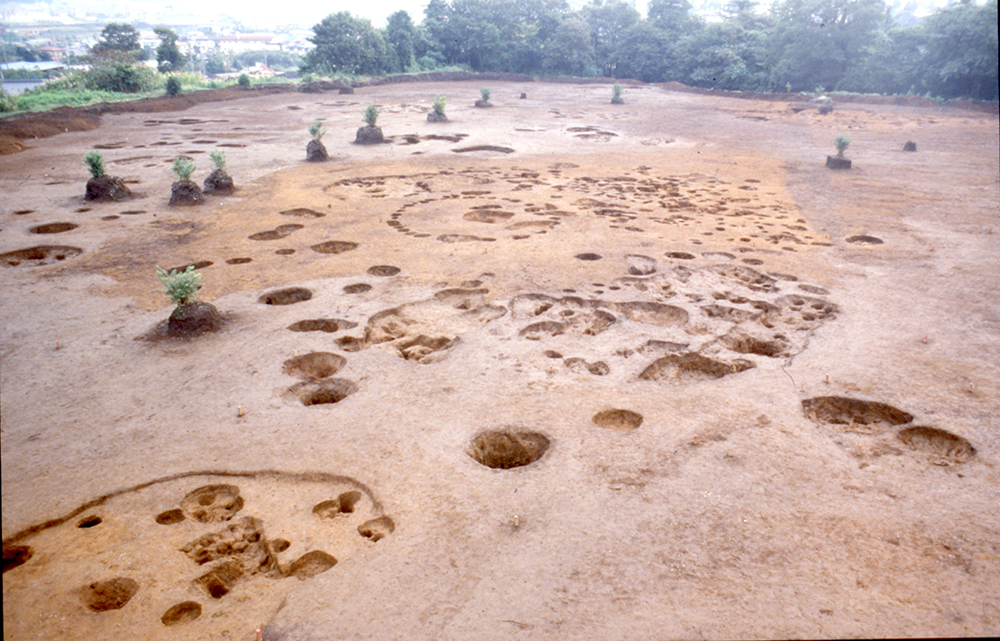
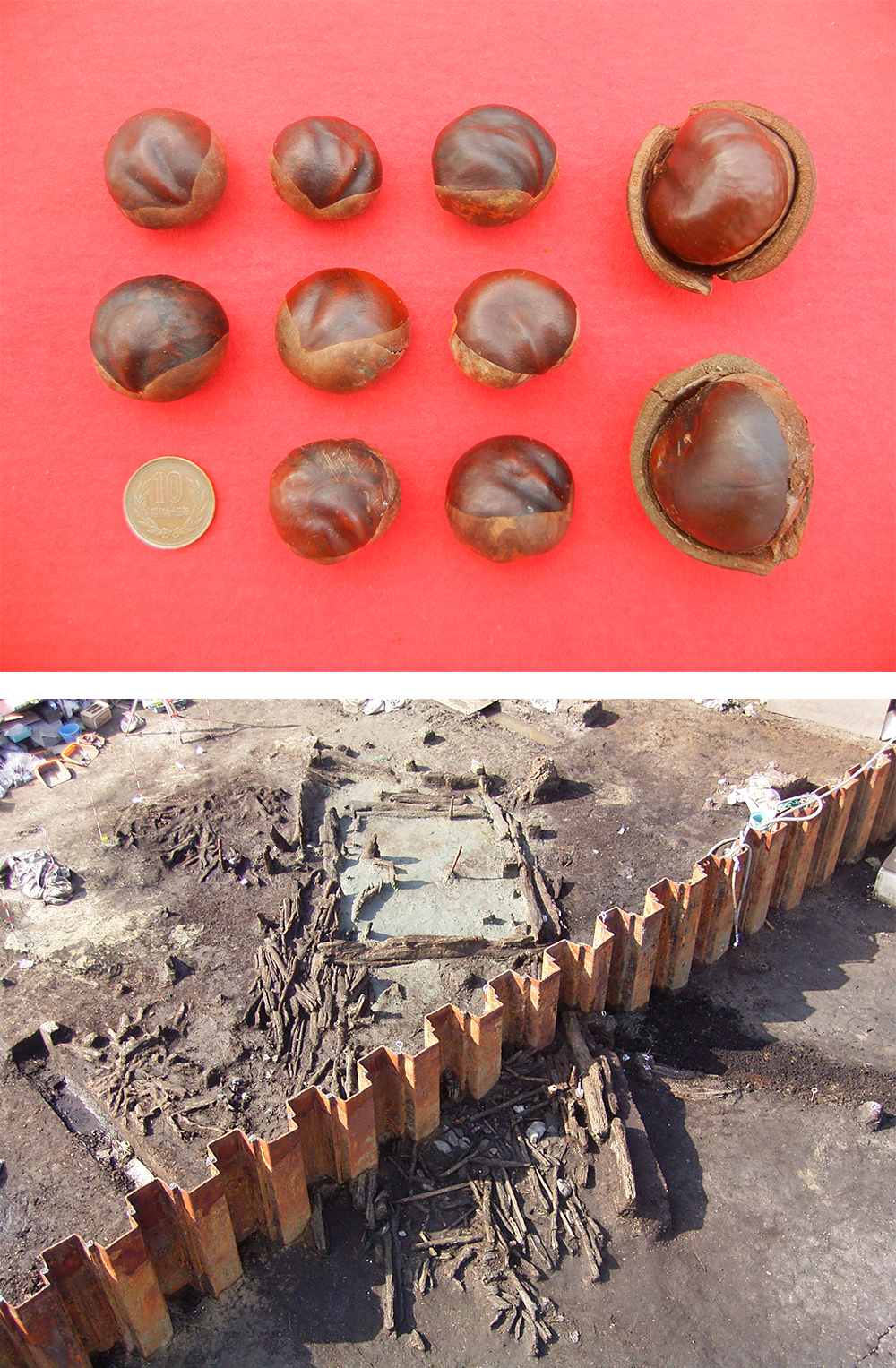
The Horinouchi Shell Mound was part of a collection of settlements that formed an extended village. Gongenbara Shell Mound lies about 400 meters to the east of Horinouchi and contains similar traces of human settlement from around 4,000 to 3,700 years ago. In a valley to the south, another site has been excavated, revealing the remains of a wooden structure that was likely used to prepare chestnuts for consumption.
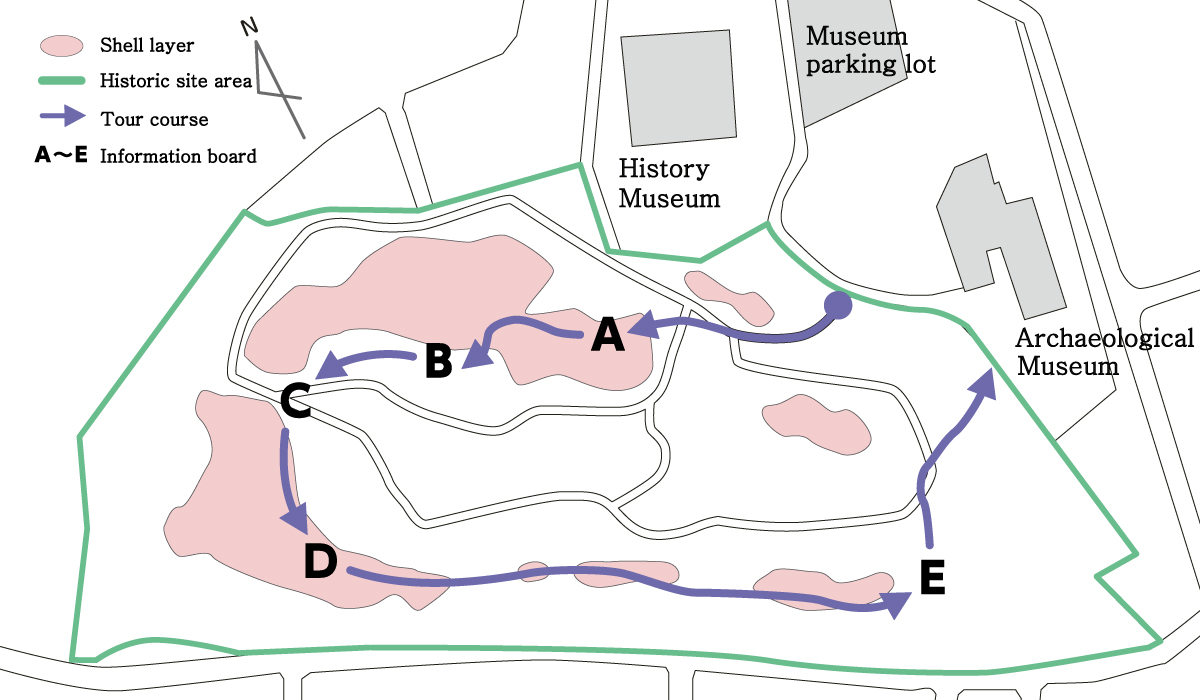
B.Where the Jōmon people lived (settlement ruins)
C.Entrance to shell mound (settlement)
D.Jōmon graves and their world beliefs
E.Shell mound (settlement) and related facilities
Excavation of the Horinouchi Shell Mound
October 19, 1954
Hakozaki Kōtō