



本文
(Nationally Designated Natural Monument)
Katsushika Hachimangū Shrine and the Senbon Ichō Ginkgo Tree
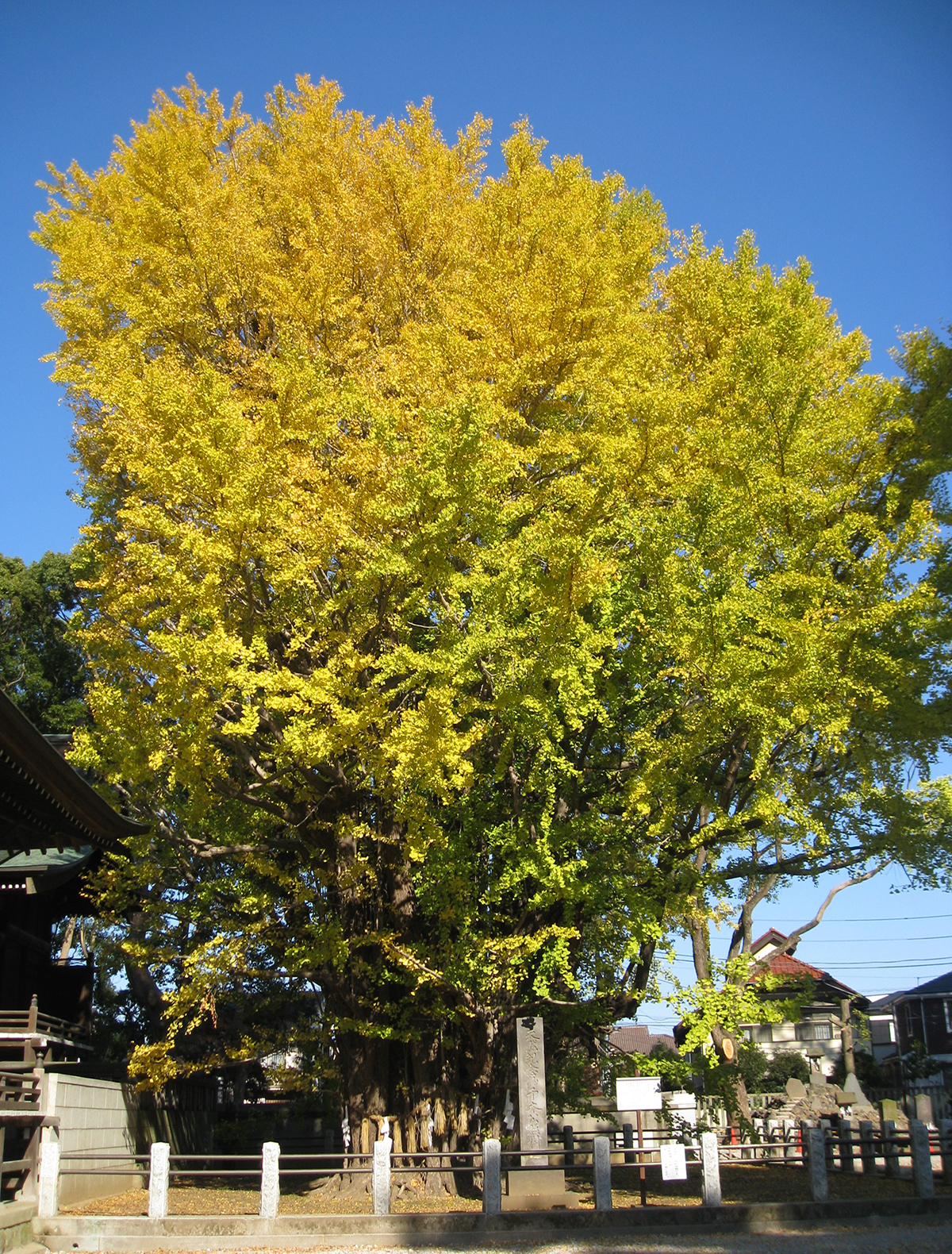
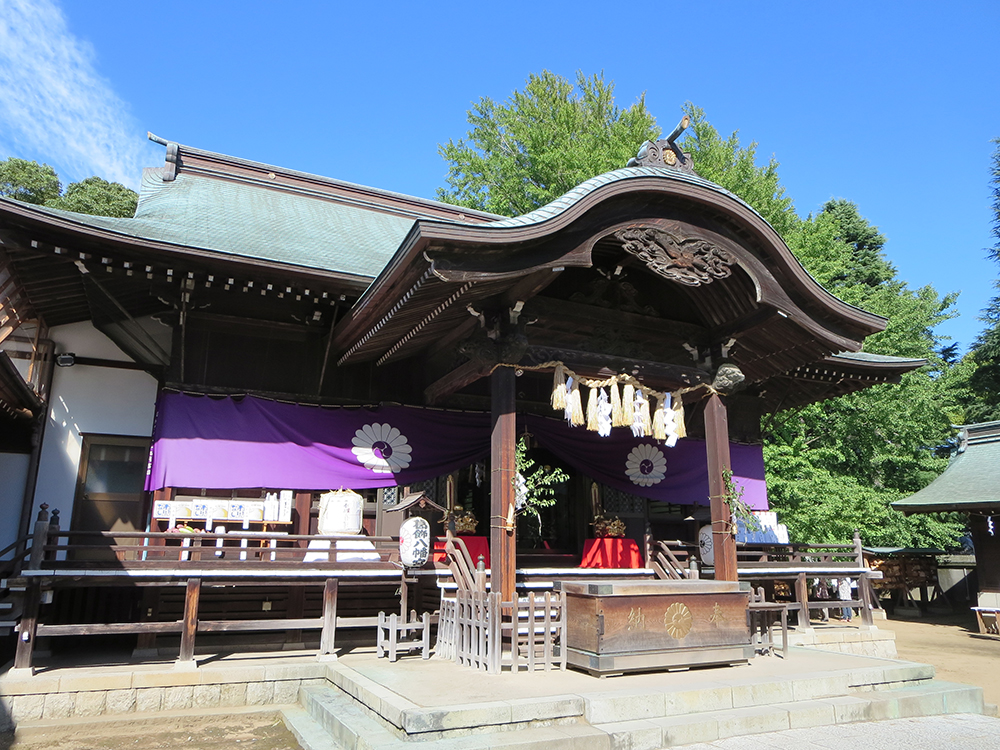
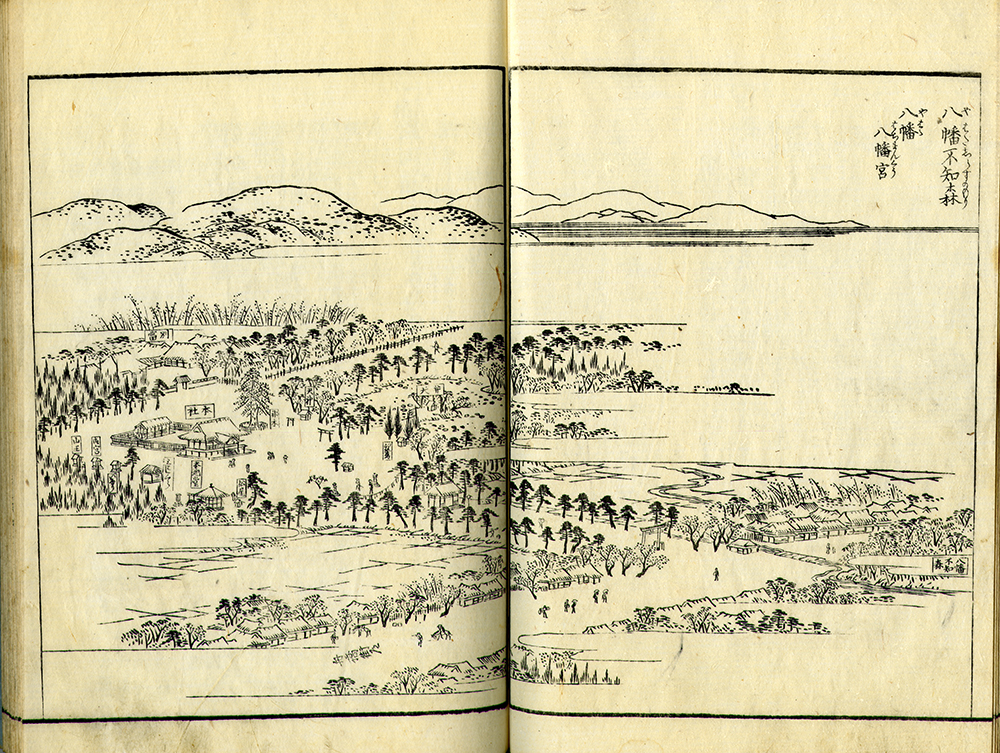
Katsushika Hachimangū was established in the late ninth century, during the Heian period (794–1185). This Shinto shrine is renowned for its sacred ginkgo tree, a Natural Monument that has been revered for centuries.
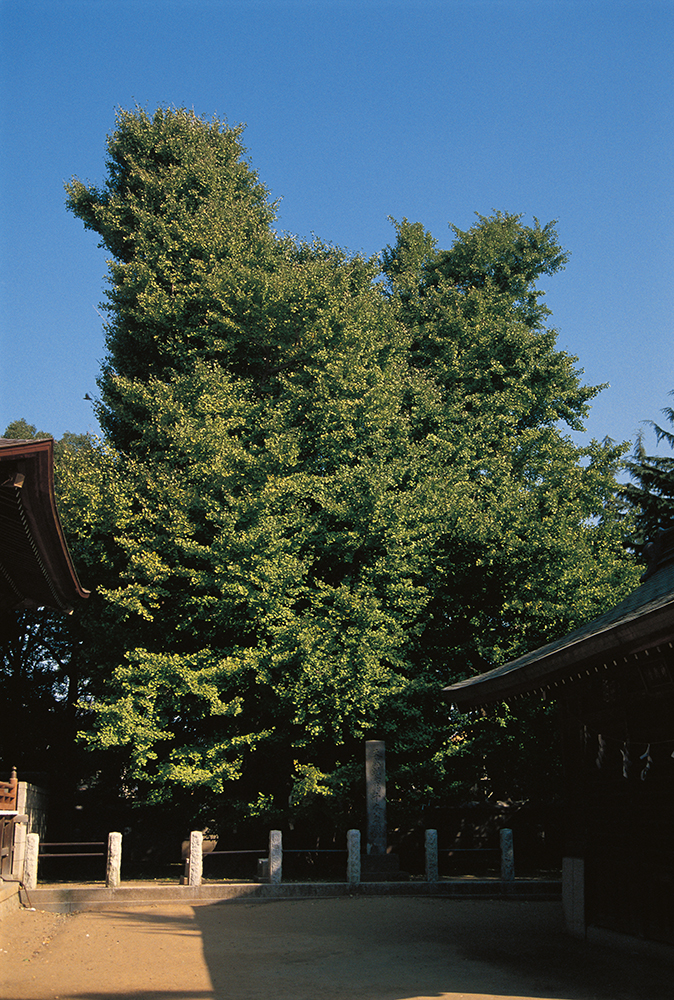
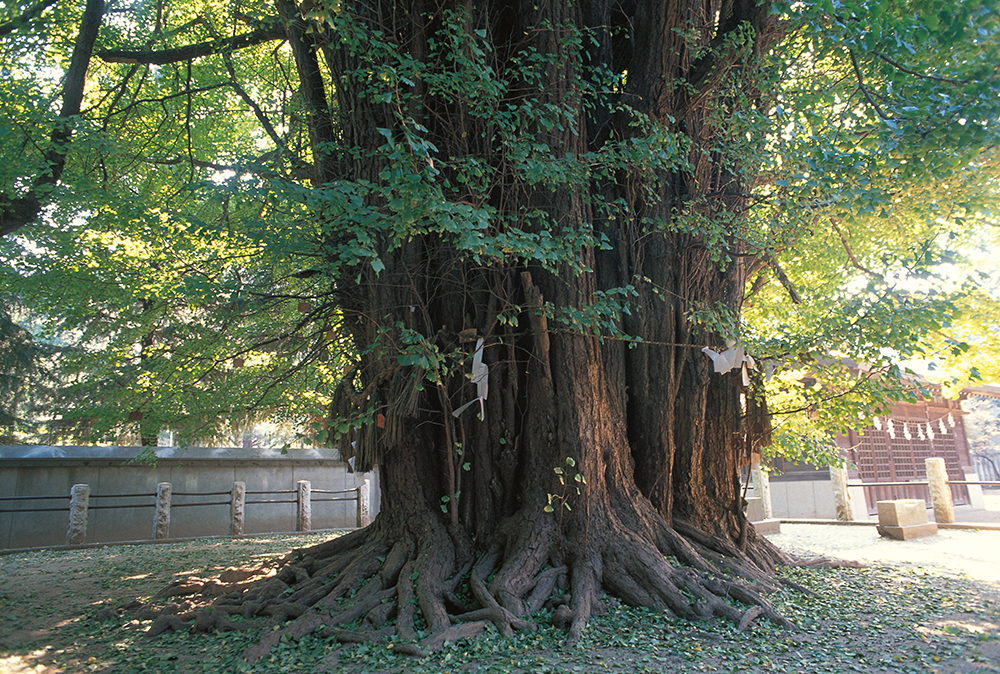
Known as Senbon Ichō, or the “Ginkgo of One Thousand Trunks,” the giant tree is believed to be about 1,200 years old—predating Katsushika Hachimangū itself. The Senbon Ichō is about 23 meters tall and 11 meters in circumference, making it an outstanding example of Ginkgo biloba, a tree species thought to originate from China. Ginkgoes do not easily catch fire and were often planted around sacred buildings in Japan to prevent fire spreading to them from the surrounding area.
A number of legends and beliefs surround the Senbon Ichō. The 資料提供 市川市文学ミュージアム
Katsushika Hachimangū was founded at the request of Emperor Uda (867–931), who ordered the deity Hachiman to be ceremonially transferred here from Iwashimizu Hachimangū Shrine in Yawata, Kyoto Prefecture, to protect the province of Shimousa. Prominent samurai appear in the shrine’s history: the warlord Taira no Masakado (d. 940) made donations to the shrine, the shogun Minamoto no Yoritomo (1147–1199) and the samurai Ōta Dōkan (1432–1486) helped restore the shrine, and the shogun Tokugawa Ieyasu (1543–1616) donated land.
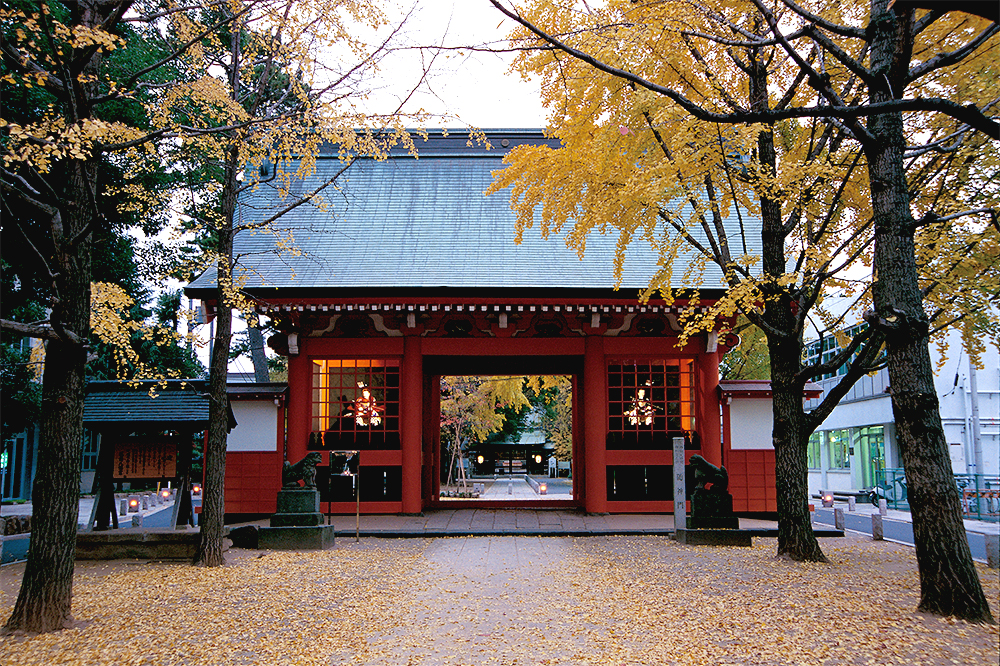
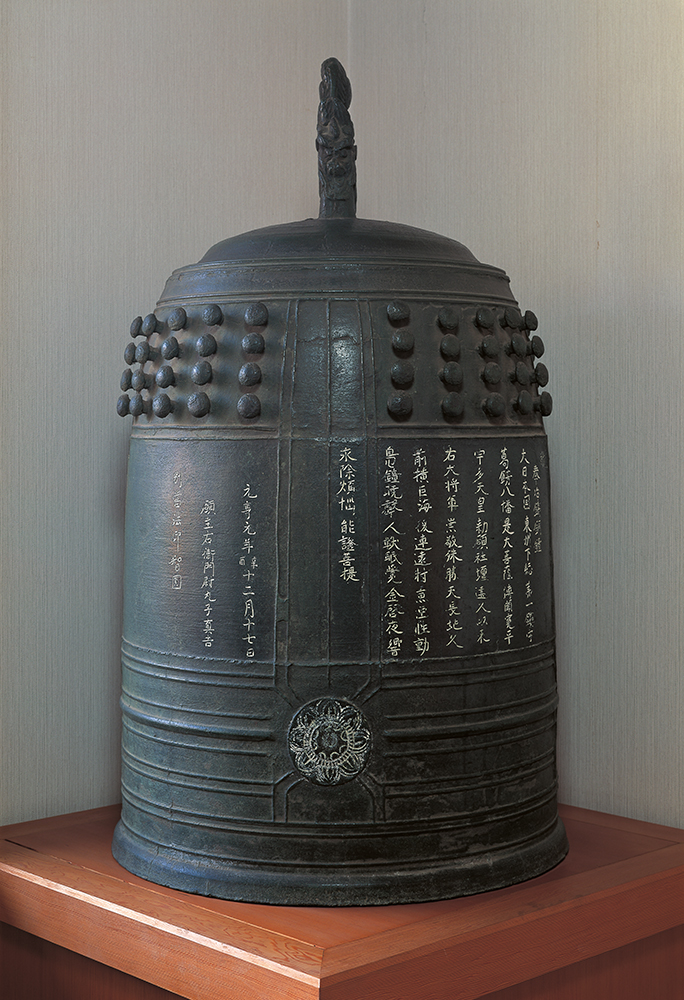
The shrine’s Zuishinmon gate stands amid a row of cherry and ginkgo trees that blaze with color in the spring and autumn. This grand, three-story structure was part of a Buddhist temple before the separation of Shinto and Buddhism mandated by the Japanese government after 1868. The shrine houses the Genkō no Bonshō, a Buddhist temple bell cast in the first year of the Genkō era (1321–1324). The bell was apparently buried under a zelkova tree during the chaotic Muromachi period (1336–1573) and rediscovered in 1793, when a storm toppled the tree.
Over the centuries, Katsushika Hachimangū has been patronized by prominent samurai, and the Senbon Ichō has been celebrated by numerous Japanese writers. Today the shrine is a cherished and carefully protected part of Ichikawa’s heritage that continues to serve the local community.
Dance of the Princess
February 6, 2020
Festival of the First Day of the Hare
(Hatsu-u sai)
Yawata Bayashi Preservation Society